How Long Does a Product Quote Take, From Start to Finish?

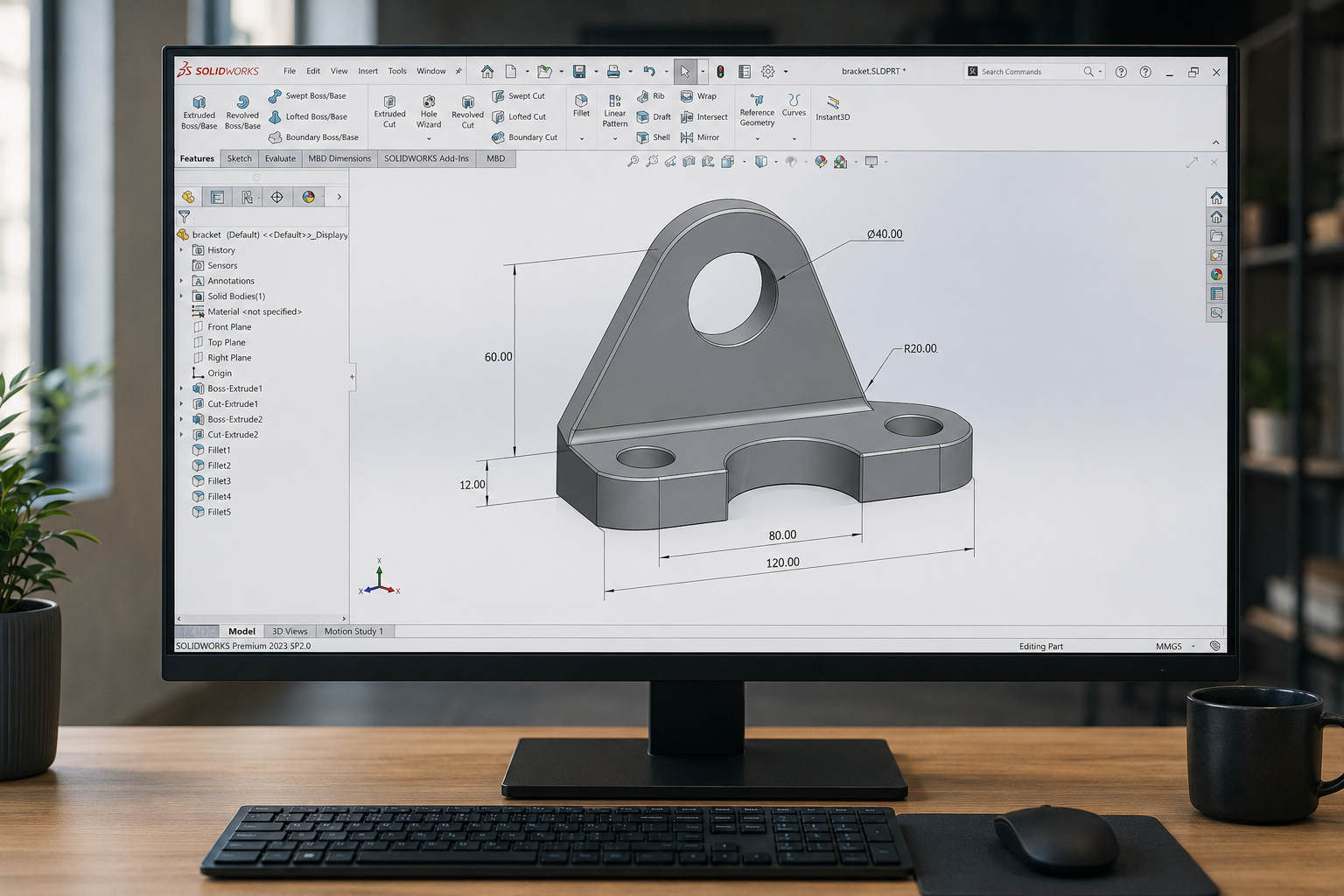
Ask most engineering teams how long it takes to get a quote for a product with 100 parts, and you’ll get an answer of 2 weeks, maybe 3 weeks. What that answer usually misses is that the quote isn’t a single event near the start of a project. It’s an ongoing process that comes up over and over again, all the way through to production.
For a clear example, let’s look at a product with 100 unique parts, with multiple sub-assemblies and moving parts. Think a mechanical assembly with a housing sub-assembly, a drivetrain or motion sub-assembly, and a fastener/hardware set tying it all together. By the time it’s actually in production, it’s been quoted more times than most teams expect.
Stage 1: The Initial RFQ
This starts once there is a design freeze and the parts are released for quotation. If you’re sending this to a contract manufacturer, they need to digest all of the parts, understand the requirements, and work out how everything fits together across every sub-assembly.
A big part of this is the time it takes to transfer knowledge from you to the supplier or contract manufacturer. You’ve been working on this project for a long time, but it’s most likely brand new for the supplier. Make sure you take the time to walk them through the intent behind the design, not just the drawings. It takes time, but it’s worth it. A CM that actually understands why a tolerance is tight or why a part is designed the way it is will catch issues earlier and quote more accurately.
For a product with around 100 parts, it’s normal for this stage to take about 3 weeks.
Stage 2: Redesigns
There will always be changes in a product. Sometimes these redesigns happen because the quote from the initial RFQ came back too high, so changes are made to reduce cost. Other redesigns happen because of user feedback, where real usage creates issues that didn’t show up on paper.
Either way, these are design-driven changes, not manufacturability changes. A part might get simplified, a feature might get dropped, a material might get swapped, all in response to cost pressure or user feedback rather than a manufacturing constraint. Each redesign cycle typically takes about 5 days for the engineering team to rework, validate, and prepare for the next round.
Stage 3: DFM & Optimization
DFM and optimization changes are a bit different. These aren’t fixing something broken or responding to user feedback, they’re making a workable design easier to manufacture at volume. Wall thickness adjusted for tool access, hole patterns shifted for fixturing across a 100-part BOM, tolerances loosened where they weren’t functionally necessary, hardware standardized to reduce the number of unique parts. This stage typically takes about 2 weeks to quote, depending on how many changes come out of the DFM review.
But the question that has to be asked once DFM is finalized is, do you need to re-quote? The answer is most likely yes. Any change to the product triggers this, and separately, if months have gone by since the original quote, exchange rates, material prices, and other costs have likely shifted too. Either one on its own is usually enough to make a re-quote necessary.
Adding It Up: What the Full Process Actually Costs in Time
Put the stages next to each other and the picture looks like this:
- Initial RFQ: about 3 weeks, including the time to transfer project knowledge to the CM
- Redesigns: ~5 days per cycle, driven by cost targets or beta feedback. Then multiply this times the number of redesigns.
- DFM & Optimization: 1-2 weeks depending on the changes made
- Re-quote (no further design changes): about a 5 day cycle, even when the design itself hasn’t changed
“Getting a quote” isn’t one milestone near the start of a project. It’s several separate quoting events, strung across the entire life of the product, each one adding real time to the schedule.
What Changes When Each Step Is Instant
None of this goes away with faster quoting. Redesigns will still happen, driven by cost or by what beta users tell you. DFM and optimization will still happen, because that’s how good assemblies get made. Material costs and exchange rates will still drift over time.
What changes is how much time each of those events costs. A redesign still takes an engineer a few days to work through, but validating that redesign against a new quote doesn’t have to add another week on top of it. A re-quote triggered by DFM changes or by market drift doesn’t have to mean requoting a hundred parts from scratch.
The engineering work stays the same. What disappears is the waiting between it.