How to Make Car Parts That Are No Longer Available
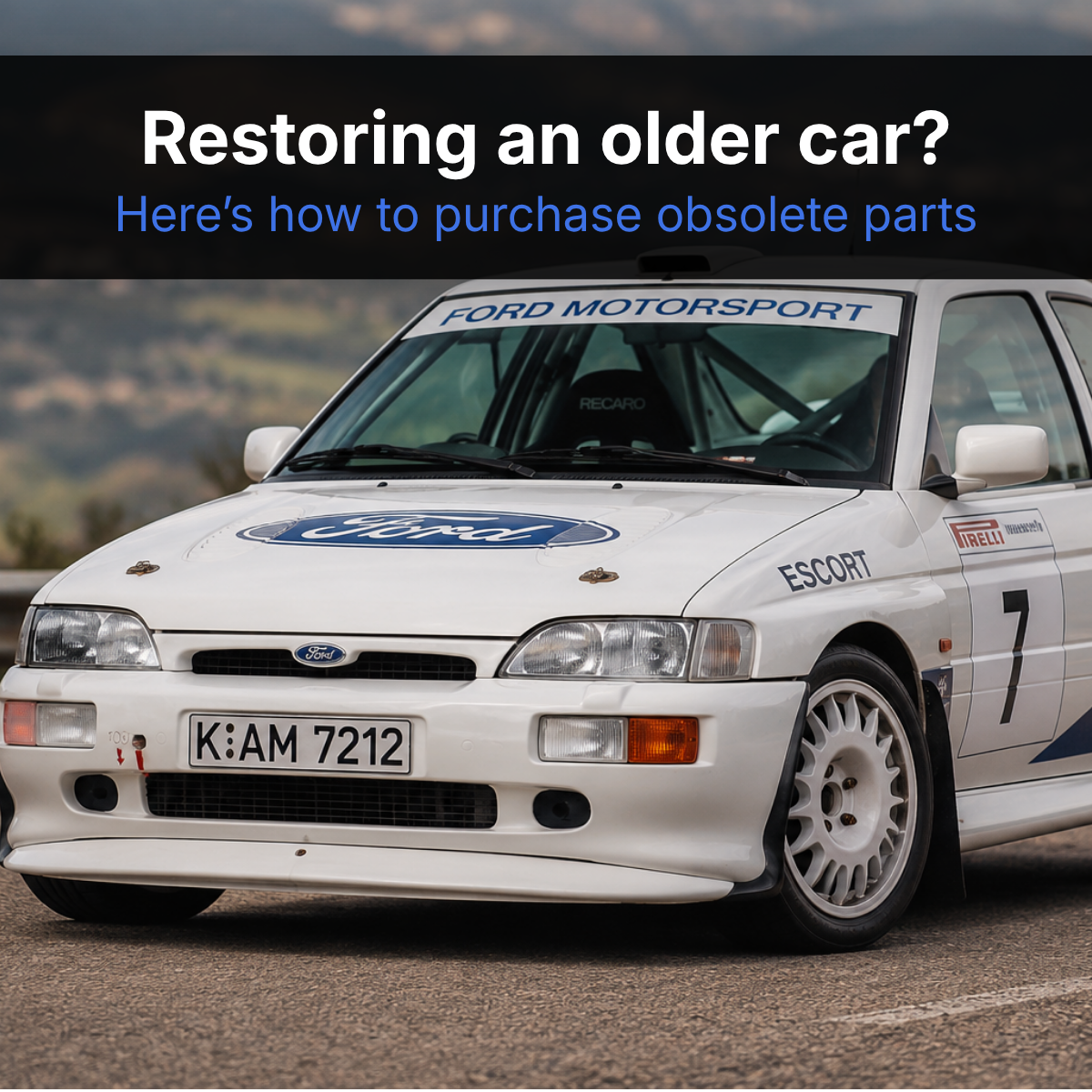
Most restoration and rally projects stop on a single part. The car is thirty or forty years old, the model never sold in the volumes that keep an aftermarket alive, and the OEM discontinued support for it decades ago. Aftermarket suppliers reproduce parts for cars with large followings, because tooling only pays back across hundreds of units. Everything outside that list falls to swap meets, used parts of unknown condition, and forum threads that end without an answer.
Rally builds hit this sooner and harder than road restorations. Suspension and driveline components are consumables on a stage car, spares are bought in pairs rather than singly, and homologated parts were produced in small numbers to begin with. Competition builds also depart from the original specification on purpose, which rules out a used original even when one can be found.
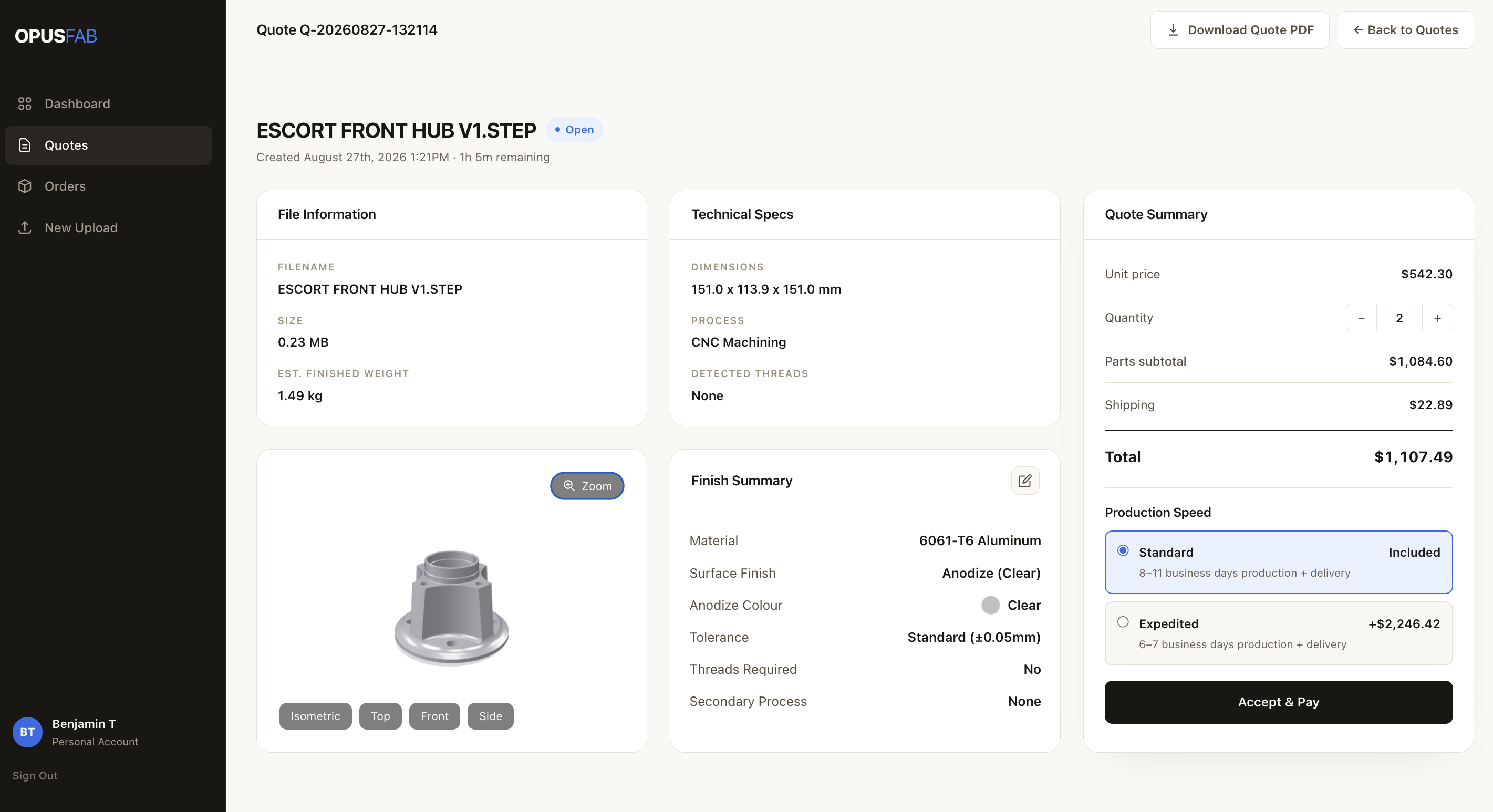
The part can still be made. Machining a discontinued component is ordinary work, and the barriers are not technical ones. A 3D file has to exist, and a supplier has to be willing to run the quantity actually needed, at a price that makes sense. This post walks through both. One recent example runs alongside it: a front hub for a rally Escort, 6061 aluminum, two parts. The alloy is spelled aluminium outside North America, and both spellings refer to the same material throughout this post.
Step one: define the part
A machine shop needs geometry, material, finish, and tolerances. For a part that is out of production, geometry is usually the missing piece. Original OEM drawings are almost never available to an owner, and when they are, they are 2D prints rather than solid models. There are three practical ways to get to a 3D file.
3D scanning the original part. Structured light and laser scanners capture the surface of a physical part and produce a mesh. This is the fastest route when a sample exists, even a damaged one. Two things to watch: the scan captures wear, corrosion and damage as if they were design intent, so worn features need to be reconstructed back to nominal dimensions; and a mesh is not a manufacturable model. The scan has to be converted into a solid CAD body with clean features before a shop can program it. Scan-to-CAD services do this, and so do most CAD packages with reverse engineering tools.
Modifying a similar part. Many components differ from a neighbouring model or a later revision by a small number of features. Bolt pattern, bore diameter, offset, overall length. Starting from an existing model of a similar part and editing the features that differ is often faster than scanning, and it produces clean geometry from the start.
Modelling from measurements. For simpler parts, calipers, a micrometer, thread gauges and a bore gauge are enough. This works well on parts with regular prismatic or rotational features. It works poorly on castings with complex organic surfaces.
Whichever route is used, the output that a supplier needs is a STEP file. In the example above, that file is ESCORT FRONT HUB V1.STEP.
Material and finish come next. The example hub is specified in 6061-T6 aluminium. On restoration and competition work, material is a decision rather than a copy. The original may have been a casting or a forging that is not practical to reproduce in small numbers, and machining from billet aluminium is often the sensible route for a low-volume replacement. Alloy selection is a separate question from the process. A front hub on a stage car is a loaded, safety-critical component, and substituting an aluminum alloy for an original ferrous part changes the fatigue behaviour of the assembly. That decision belongs to whoever is responsible for the design, and it should be made against the actual loads, the wear surfaces, and the scrutineering rules for the class the car runs in.
Tolerances matter on a small number of features and not on the rest. On a hub, the bearing bores, the pilot diameter and the stud pattern carry the fit. The outer profile does not. Calling out tight tolerances across the whole part raises the price without improving anything that matters.
Step two: find a supplier who will make it
This is where most projects stall a second time.
Machining cost at low volume is dominated by setup. Programming, workholding, tool selection, and a first article inspection all happen once, whether the run is one part or two hundred. On a small order, all of that is spread across a handful of parts. Most shops are built around repeat production and are not structured for a job that will never repeat. Low volume orders that come back consistently are workable for a lot of shops. A genuine one-time order is a different proposition.
The result is familiar to anyone who has tried to source a small number of parts. Some shops decline the order. Others accept it and quote a number high enough to cover every uncertainty, because quoting a one-off takes the same engineering time as quoting a batch of five hundred and there is no follow-on volume to justify that time. And the quoting process itself takes days: send the file by email, wait, receive one number with no breakdown, send a revision, wait again.
None of that is unreasonable behaviour on the part of the shops. It is what happens when a one-off order goes through a process designed for production work.
Step three: quote the part
OpusFab has a minimum order quantity of 1. One part, two parts or fifty are all normal orders rather than exceptions, and the quote works the same way for any of them.
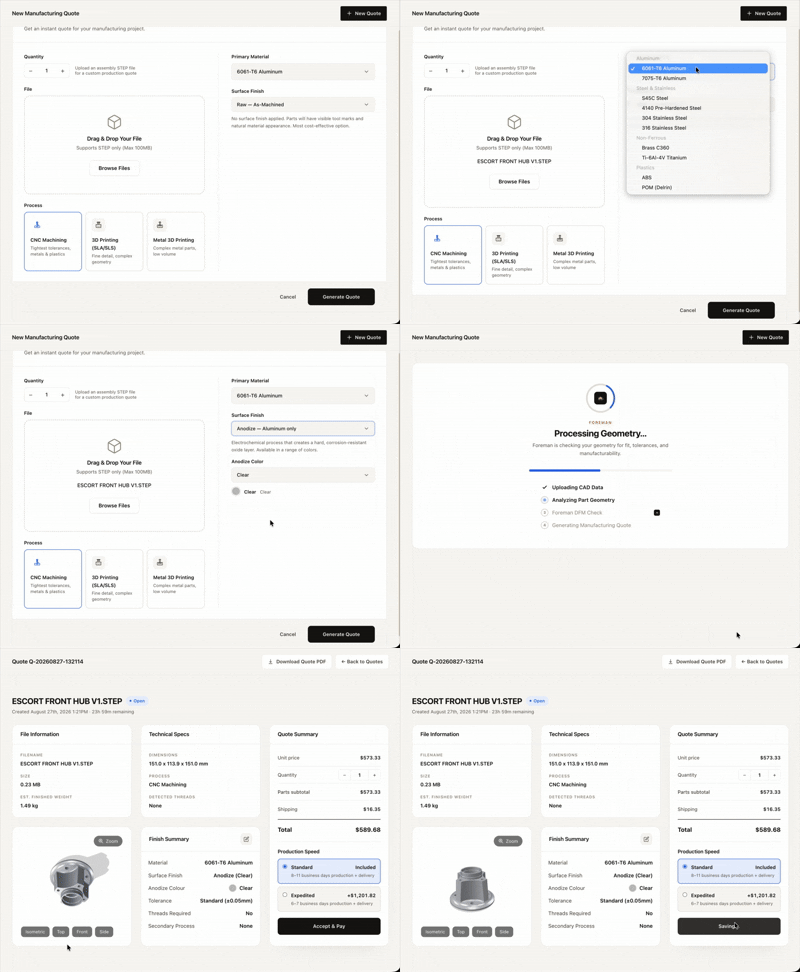
Here is what the Escort hub order looked like:
- Upload ESCORT FRONT HUB V1.STEP to the quote page.
- Set the quantity to 2.
- Select the material: 6061 aluminum.
- Select the finish.
- Set the tolerance requirement for the part.
- Quote and purchase.
That takes about 30 seconds, and it happens without contacting a salesperson. Manufacturability feedback is returned alongside the quote, so problems in the model show up before the order is placed rather than after. If a feature cannot be machined as drawn, the issue is flagged with a suggested fix.
OpusFab owns its machines and production space rather than routing orders to a network of third-party shops. For restoration and rally work, that matters mainly at the point where a part gets made a second time. A file that has been run once can be run again against the same process on the same equipment, which is the difference between a replacement spare and a part that is nominally the same but came out of a different shop.
Step four: track the order
After checkout, order status is visible by logging in. Email notifications go out as the part moves through fabrication, coating, quality control, and shipping.
There is no requirement to talk to anyone at any point in that process. A person is available for anyone who wants one, but the default path from file to delivered part does not depend on it.
The practical takeaway
A discontinued part is a sourcing problem before it is a manufacturing problem. Once a clean STEP file exists and a supplier accepts a quantity of one, the part is just a machining job with a price and a lead time.
The file is also worth keeping. A model built for a restoration or a rally build can be re-run years later, shared with a club or a registry, or used as the starting point for an upgraded version in a different material. On a competition car, where the same component gets replaced more than once over a season, that file is the spares supply.