When Is the Right Time to Send Product Data to a Supplier?
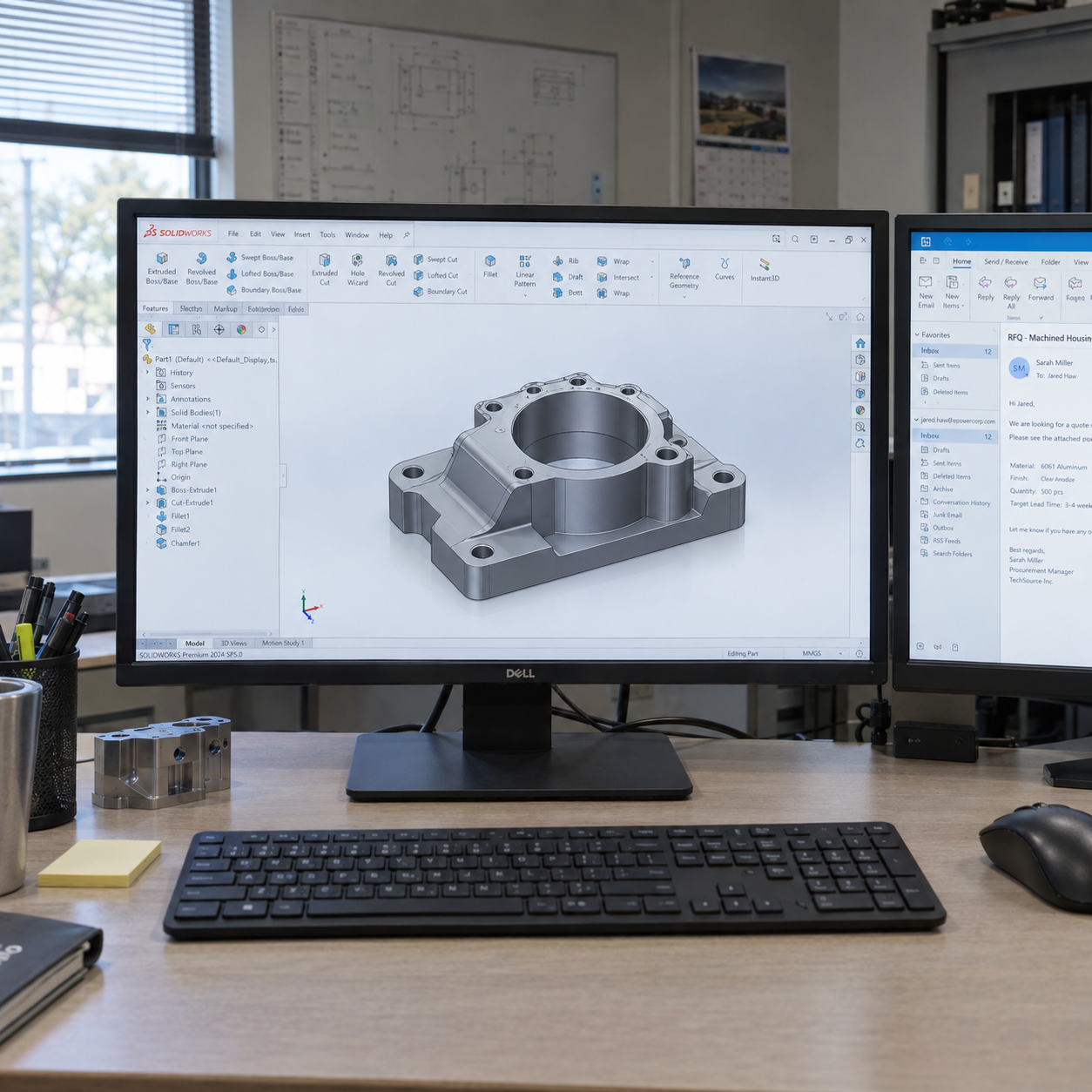

The common advice is to talk to a supplier early. But early conversations often fail to lead anywhere, because the supplier has nothing to act on. A concept without a CAD file, a bill of materials, or a working prototype is not something a supplier can quote, provide DFM feedback on, or plan production around. The founder walks away with a vague conversation, and the supplier moves on to companies with more to work with.
There is no fixed rule for timing. But in practice, the right time to send product data to a supplier comes down to two conditions: the design has reached a functional prototype, and there is some demand for the product. Meeting both conditions makes the supplier conversation productive. Meeting neither makes it a waste of time for both sides.
What happens when data goes out too early
Sending data before the design is developed enough creates a few predictable problems:
- There is no CAD file or BOM for the supplier to quote against
- DFM feedback is premature if the design will still change substantially
- Without evidence of demand, the supplier has no reason to prioritize the request over their existing pipeline
The result is usually a short conversation that does not go anywhere, and a founder who is not taken as seriously the next time they reach out.
The cost of waiting too long
Waiting too long carries its own cost. If customers have been promised a product by a certain date, reaching out to a supplier late can push that date back before production even starts. The other risk is a rushed process. When a supplier is brought in late, the DFM review and prototyping happen under time pressure, and that pressure is where problems get missed instead of caught.
The signal that timing is right: a functional prototype
The clearest signal that a product is ready for supplier data is a functional prototype. It does not need to be refined or production ready. It needs to work. A functional prototype also means the CAD model and the bill of materials already exist, since neither the prototype nor the DFM review is possible without them. At this stage, the supplier is reacting to something real, not a concept that may not survive testing. A prototype gives the supplier something concrete to run DFM feedback against, and gives the founder confidence that the core design is not about to change again.
Have a sales plan before approaching a supplier
A supplier commits capacity, materials, and engineering time based on expected volume. A good product idea without evidence of demand gives the supplier nothing to plan around. This does not require a finished sales forecast. It requires some basis for the supplier to believe the parts will actually be ordered, whether that is presales, committed customers, or a clear go-to-market plan.
The founder does not need to share every detail of the sales plan. But the supplier will want a sense of how the product will sell and what the target volumes look like. The supplier is a manufacturing partner, not just a vendor, and sharing that information is part of a normal partnership. If sharing basic sales information creates a trust problem, that is a sign the relationship is not the right fit.
No sales, no reason for the supplier to build anything.
A direction is enough, not a finished spec
Founders often hold back from talking to suppliers because they feel they have not figured everything out yet. That is normal, and it is not the bar. The bar is having a clear direction: what the product needs to do, what is still unresolved, and what has to happen next to move it forward. Suppliers can help close remaining gaps once the core design and the demand behind it are established. They cannot supply either one from scratch.
What to send once the timing is right
Once a design has a functional prototype and some demand behind it, the supplier conversation becomes worth having. At minimum, that conversation should start with:
- A CAD file
- A bill of materials
- A short product introduction: what the product is and what problem it solves
- A timeline
- Any known constraints: target price, materials, certifications, or anything else relevant to how the part gets made
Conclusion
There is no universal answer for when to send product data to a supplier. But a functional prototype and some demand behind it are a reliable threshold. Before that point, most supplier conversations produce little more than a vague exchange. After it, the supplier has something real to work with.
Platforms like OpusFab that offer instant quotes and DFM feedback make it easier to test this threshold without committing to a full supplier relationship up front.