Why Kickstarters Struggle to Go from Prototype to Production
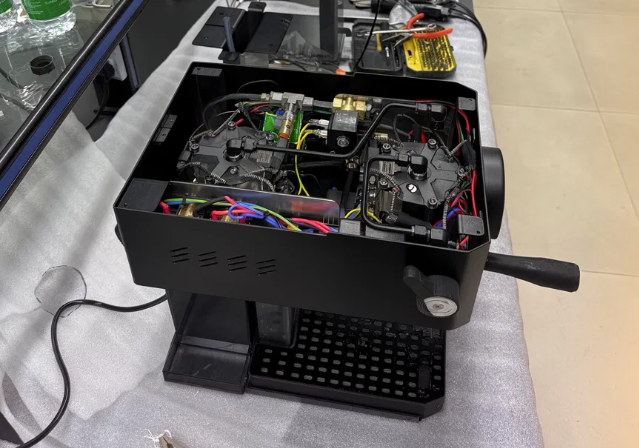
Every year, tens of thousands of projects hit their funding goal on Kickstarter. A working prototype, a demo video, a clear pitch. Backers pledge money. The campaign closes successfully. Then, for a large share of these projects, something goes wrong on the way from Kickstarter to production.
The prototype shown on the campaign page was often not designed to be manufactured. The budget that looked sufficient during the campaign turns out to be short once tooling, certifications, and real unit costs are calculated. And the funding itself is often misunderstood. Founders treat it as investment capital, when it’s actually a pre-order. Backers are not buying equity. They are paying in advance for a product, usually at a discount, and they expect it to be delivered.
This gap, between a working prototype and a manufacturable product, is where most Kickstarter campaigns run into trouble. It’s usually not because the idea was bad or demand wasn’t there. It’s because the transition from Kickstarter to production requires different skills, different timelines, and different financial planning than building a prototype does.
The data supports this. Kickstarter’s own fulfillment research, based on an independent study conducted with Wharton professor Ethan Mollick, is still the platform’s benchmark today: roughly 9% of successfully funded projects never deliver a reward to backers.
In 2025, a record year for the platform overall, Kickstarter’s own year-end review noted that Design & Technology campaigns dealt with rising costs and supply chain pressure while still posting the category’s best year on record. That means cost and manufacturing problems are still present even as the platform grows. Hardware is one of the hardest categories to complete successfully.
This post covers why the transition from Kickstarter to production is difficult, the specific cost issues that catch founders off guard, why Kickstarter funding works more like debt than equity, and what a founder can do to run a campaign built for production, not just for funding.
Why a Prototype Isn’t a Product
A Kickstarter prototype is built to prove a concept works. It’s usually built and assembled by hand, by the same people who designed it. That’s appropriate at that stage. But it doesn’t mean the design is ready to be manufactured.
A few examples of things that work at the prototype stage but cause problems at production volume:
- Tolerances. A part that fits because someone filed it down by hand will not fit the same way once it’s produced on a CNC machine or in an injection mold by someone who wasn’t involved in the original design.
- Materials and finishes. The material used for a 3D-printed enclosure is rarely the material used in the manufactured version. Different material means different tolerances and different assembly behavior.
- Assembly steps. If a prototype takes two hours to assemble by hand, that is not a production process. Production requires a repeatable, documented assembly sequence that someone unfamiliar with the product can follow correctly.
This is where design for manufacturing (DFM) matters, and it’s the step most often skipped. Campaigns move quickly, and founders are focused on the demo, the video, and the pitch. Manufacturability review usually gets pushed to after the campaign is funded. By then, a price, a spec, and a timeline have already been promised to thousands of backers, based on a design that hasn’t been checked against how it will actually be manufactured.
The Real Difficulties of Going from Kickstarter to Production
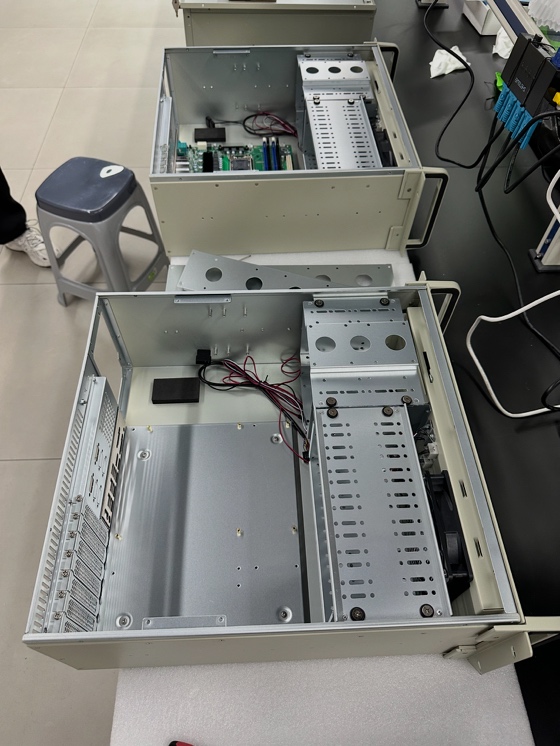
Even with a design that’s ready to manufacture, the path from Kickstarter to production involves a specific set of obstacles that founders without manufacturing experience typically don’t anticipate.
Finding a manufacturer willing to take the job. Most contract manufacturers are structured around steady, recurring volume. A one-time order of 2,000 units, with no guarantee of a repeat order, is a hard sell to many shops. Founders often end up working with manufacturers who are willing to take on low, uncertain volume, and that group tends to be smaller and less experienced than expected.
Tooling lead times. Injection molds, jigs, and fixtures take real time to design, cut, and validate. This process is not a two-week turnaround. Depending on part complexity, it can take months, and it cannot begin until the design is finalized.
Design changes discovered only at scale. A single handmade unit can hide a problem that only becomes visible once the same part is produced 50 or more times. In one documented case, a keyboard controller team discovered they had left out backlighting the day after their campaign was funded. Fixing it required a new keymat, an additional PCB layer, and a redesigned case. Changes like this affect cost, timeline, and sometimes the project’s ability to continue at all.
Quality control at volume. Testing one unit is not equivalent to testing a full production run. Without a real QC process, tolerance and calibration issues can affect an entire batch before anyone identifies them.
Supply chain risk. Single-sourced components, minimum order quantities, and stacked lead times across multiple suppliers all introduce risk that doesn’t exist when sourcing parts for a single prototype.
The Cost Problem
The cost of building one prototype provides almost no information about the cost of building 5,000 units. Many campaign budgets are built as if it does.
Here is where the money actually goes, and where founders are most often surprised:
- Tooling and fixtures. Usually the largest single upfront cost, and one that’s easy to underestimate without a real production quote.
- Certifications. Depending on the product category, safety, EMC, or regulatory certifications may be required before a product can legally ship. These take time and money, and are easy to overlook while focused on the campaign page.
- Packaging and freight. Retail-ready packaging, shipping, duties, and customs all add real per-unit cost. International freight also carries its own risk of damage, delay, and unexpected fees.
- Re-quoting costs. Any design change made after tooling has started typically requires a new quote, and that new quote is almost always higher than the original.
The core issue is that founders price their campaign reward based on cost assumptions closer to prototype cost, then discover the actual production cost after they’ve already committed to a price and a delivery date. At that point, there is no room to raise the price. The remaining options are to cut corners, delay, or spend money the project doesn’t have.
The Big Misunderstanding: Kickstarter Isn’t Investment, It’s Debt
This is the part that causes more problems for founders than almost anything else on this list.
Kickstarter funding is not equity. It is not money from a VC who is betting on long-term upside and has accepted the possibility of losing the investment entirely. It is a pre-order. Backers pay money now for a product they expect to receive later, usually at a discount from the eventual retail price.
That distinction matters because of what it implies about the money. Every dollar collected comes with an obligation, which is a specific product, delivered to a specific person, on a timeline the founder set. There is no equivalent of a down round or a pivot. A founder cannot tell a backer that the plan didn’t work out the way an entrepreneur might tell an investor. The founder owes a product, or a refund.
This is why spending most of a campaign’s funds on tooling, without a separate plan for operating cash, creates real risk. Tooling is a one-time cost that does not generate revenue on its own. If tooling consumes most of the funds and there’s no other plan to bring in cash before units ship, a project can run out of money in the period between finishing tooling and actually shipping and selling product. This is the point where a large share of failed and significantly delayed campaigns get stuck. It’s rarely one dramatic failure. It’s typically a gradual cash shortage that starts with treating pre-order money as if it didn’t need to be paid back in the form of a delivered product.
What Kickstarter Creators Should Do Differently
None of this means crowdfunding is a bad way to launch a hardware product. It means the campaign needs to be treated as a manufacturing commitment from day one, not only as a marketing and funding event.
- Validate manufacturability before launching, not after funding. Get a DFM review done on the actual design before it goes on a campaign page.
- Get real production quotes, not prototype quotes, before setting a price. A quote for a single unit from a machine shop does not reflect the cost per unit at volume.
- Build a cash flow plan that covers the period between funding and delivery, not just the cost of building the product itself.
- Keep a reserve. Avoid allocating all funds to tooling. Leave room for certifications, re-quotes, and freight costs that haven’t been incurred yet.
- Plan for cost overruns in advance. Decide ahead of time what to do if a supplier quote comes in 20% over budget, since this is a matter of when, not if.
Steps for a Good Kickstarter Campaign, Built for Production
- Design with manufacturing in mind from day one. Involve someone with DFM experience before the prototype is finalized, not after the campaign is funded.
- Get production-level quotes before setting the funding goal. Price and funding goal should be based on real manufacturing numbers, not prototype costs scaled up informally.
- Build in margin for tooling, certification, and freight. Budget for the costs that don’t appear until the project is actually trying to ship.
- Set a realistic timeline, and communicate it honestly to backers. A timeline based on best-case manufacturing assumptions is a timeline that will likely be missed.
- Line up a manufacturing partner before the campaign ends, not after. Confirm the production plan is real before making public commitments based on it.
- Plan cash flow like debt repayment. That is functionally what it is. The campaign has taken an advance against a product owed to backers, and the plan for delivering it should not depend on everything going as expected.
Closing
A successful Kickstarter campaign is not the end of the work. It’s the point where the harder part begins. Going from Kickstarter to production is a manufacturing problem as much as it is a marketing one, and founders who treat it that way from day one are the ones who are able to ship.
This is the specific problem OpusFab was built to address. Teams in this position have already committed to a price and a delivery date, and they need accurate information quickly, not after weeks of back and forth with a manufacturer. OpusFab provides instant quotes and instant DFM feedback, so founders can revise their design and get updated cost and manufacturability data within hours. Once an order is placed, OpusFab provides live part status, showing the stage of each part from machining through shipping.