Traditional RFQ vs Instant Quote: What Actually Changes Between the Two Processes
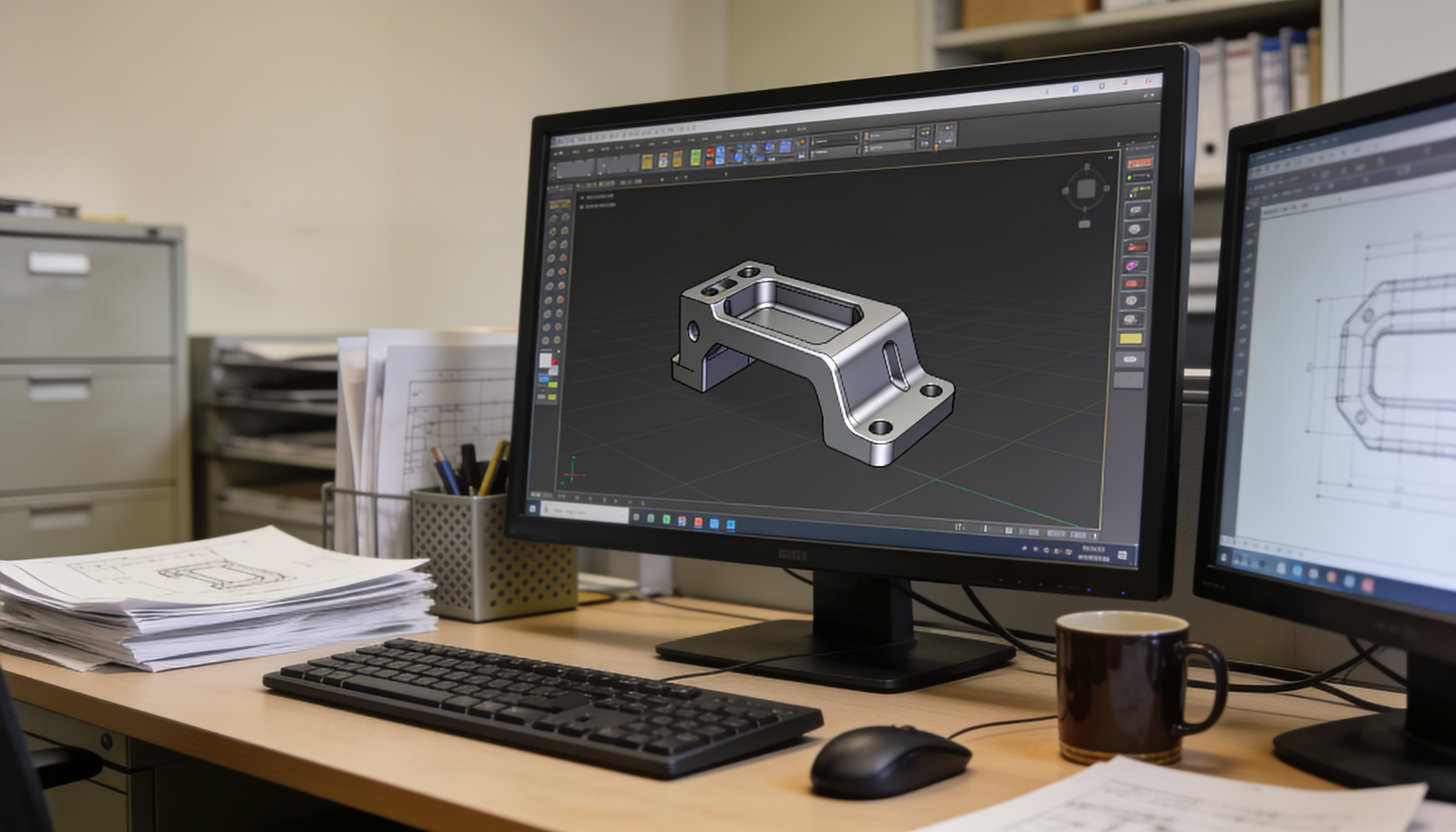

A quote takes a long time. An engineer can design a part in four hours and then wait three days just to find out what it costs to make. That gap has always been hard to accept, for engineers and for project managers that are responsible for the timeline. That was the traditional RFQ process, and for a long time it was the only option. RFQ vs instant quote is the comparison more teams are running into now, as instant quoting starts to mature.
Not every instant quote provider works the same way. Some, like OpusFab, are vertically integrated, while others operate as marketplaces connecting you to a network of shops. But what they’re all doing is pushing the industry toward something better, and it’s changing how we think about RFQs, not just for a single prototype part but as manufacturing moves toward mass production too.
There’s also a scope difference worth naming upfront. A traditional RFQ is rarely just one part. It’s usually an assembly with a BOM and multiple STEP files. Instant quoting, on the other hand, is mostly built around a single part upload.
The Traditional RFQ Process, an Assembly
Here’s what actually happens between sending an RFQ and getting a price back, step by step, for a full assembly.
Submission
You send the RFQ, usually by email, to a supplier. The RFQ package will usually include the BOM, CAD files, quality requirements, a product introduction, and more. The information you provide will dictate the quality of the quote you receive. So, if you don’t provide sufficient information or the files are outdated then the quote you get will not be accurate.
Supplier RFQ Review
The supplier receives the RFQ and will assign a PM or account manager, who becomes your point of contact for the quote. This person will also be responsible for passing the information to the engineer to evaluate the data in the RFQ.
Engineering Review
An engineer reviews everything provided in the RFQ, the STEP files, the BOM, and any additional information included. They’re looking across the whole assembly for major red flags or roadblocks. If there are issues then they will pass this information to the account manager who will inform the customer. If there are no red flags then the supplier will start the quotation process.
The Actual Quoting Starts
This is where most of the time goes, and it happens part by part. Someone has to estimate machine time, the cost for material, direct labor, and other things that go into fabricating each part. Also, any custom parts that need tooling or a fixture gets priced separately as a separate line item.
Offer a Full BOM Quote
Every part gets brought into one full BOM quote. Each part has its own quote, and if there’s any additional tooling involved, that gets quoted separately from the parts themselves. The account manager pulls all of this together and presents it to the customer as a single quote.
Timeline. For a single part on its own, this process typically runs around 3 days. But a traditional RFQ is almost never just one part. It’s a full assembly that takes much more resources and care from the supplier. Across an assembly, it stretches to 2 to 3 weeks, because every part needs its own geometry review, its own tolerance check, its own cost buildup, before the whole thing can quote as a system.
The Instant Quote Process
Instant quoting removes most of the steps above. There’s no account manager assigned to the RFQ, no engineer manually reading a drawing, no email exchange waiting on a missing tolerance. You upload a file and a price comes back. It’s a much simpler process than a traditional RFQ, and it’s built for a single part.
Most instant quote engines are built to price one part at a time, and that doesn’t scale well for a full assembly. A BOM with dependencies between parts, shared tooling, or sub-assembly logic isn’t something most instant quote platforms can handle in one pass.
1. Upload
You upload a CAD file and drawing for a part, the same data you’d otherwise attach to an email.
2. Automated DFM check
The platform flags manufacturability issues immediately. Walls too thin, tolerances that will spike cost, features that need nonstandard tooling. This is the same kind of feedback a good estimator would give you, if they had time to give it before quoting instead of after.
3. Automated costing
A costing engine calculates machine time from the part geometry, pulls current material pricing, and applies your quantity and margin rules. Same categories a human estimator would build by hand, run algorithmically instead.
4. Instant quote returned
Price and lead time show up in seconds. Change the quantity or material and the price updates live, no re-submission required.
Timeline. Seconds to a couple of minutes, per part.
Instant quoting is convenient and dramatically faster than the traditional process. But instant quote engines aren’t all built the same way, and this is where the gap shows up. Most are designed to read individual part files, not assembly or BOM files. There’s no way to upload a full assembly and get a single quote back for it. You’d have to upload each part file on its own and quote it separately. That’s the real shortcoming across most instant quote platforms today. Speed at the part level hasn’t yet translated into speed at the production or assembly level.
Side-by-Side, One Part, Each Process
| Traditional RFQ | Instant Quote | |
|---|---|---|
| Turnaround | ~3 days | Seconds to minutes |
| Human touchpoints | PM/account manager, engineer, machinist | None required |
| DFM feedback | Sometimes, if there’s time | Immediate, every time |
| Data required | CAD, drawing, quantity, material, delivery date | Same |
| Error/revision risk | Higher, manual review and judgment calls | Lower, consistent calculation |
| Visibility into status | Limited, dependent on follow-up | Live |
| Handles full assemblies/BOMs | Yes, natively | Mostly no, usually one part at a time |
This isolates a single part on purpose, since that’s the only place the two processes overlap cleanly. Traditional RFQ handles the jump to a full assembly without changing process. Instant quoting, for most platforms, doesn’t yet.
Both sides start from the same package of information.
- CAD file (STEP, DWG, or similar)
- 2D drawing with tolerances and GD&T callouts
- Material and finish requirements
- Quantity
- Target delivery date
None of this changes depending on which path you take. The RFQ vs instant quote comparison isn’t about better or worse data. It’s about what a supplier does with it once they have it.
A slow quote isn’t just an inconvenience while you wait, either. It delays the PO, which delays production, which delays assembly, which delays your launch, and every day added to the quote gets added again downstream.
The Bottom Line
Traditional RFQ and instant quote use the same data. The difference is process, manual, sequential, and human-dependent on one side, automated and immediate on the other. For a single part, that difference is the gap between 3 days and 30 seconds, and it’s genuinely convenient.
But instant quote engines aren’t interchangeable, and most share the same shortcoming. They’re built for one part at a time, not for the full assemblies and production volumes that traditional RFQ has always handled. Closing that gap, not just quoting faster but quoting at production scale, is where the next real shift in this comparison is going to happen.
Get an instant quote and see the difference for yourself.