DFM For a Prototype: What Actually Matters?

How much design for manufacturing (DFM) a prototype needs depends on how close the design is to being finished. A proof of concept and a pre-production build require very different levels of review, and treating them the same way either wastes time or creates a redesign later.
What DFM actually checks
DFM is a review of a part against the process that will make it. A typical review covers:
- Wall thickness. Thin walls chatter in machining and warp in molding.
- Internal radii. Sharp internal corners cannot be cut with a round tool. Every internal corner needs a radius, and a small radius means a small tool and a long cycle time.
- Tool access. Deep pockets, undercuts, and features on five faces all change how the part is held and how many setups it takes.
- Tolerances. Which dimensions are tight, whether they are achievable in the process, and what they cost.
- Material. Whether the alloy or resin is available in the required form and size, and what the lead time is.
- Secondary processes. Anodizing, plating, heat treatment, and finishing each have their own constraints and their own minimum quantities.
- Fixturing. How the part is held, and whether holding it distorts it.
Each of these is either a manufacturability problem or a cost problem. Some are both.
The question that decides everything: has the design been frozen?
The useful filter is not the type of prototype. It is whether the design has been frozen.
A design freeze means the geometry, the material, and the process are all committed. Nothing further is expected to change. Once that point is reached, a full round of DFM is required, because every finding is a finding that will otherwise carry into production.
Before that point, DFM findings have a short shelf life. A tolerance review on a part that gets three more revisions is work that gets thrown away with the revision. That is the case for going lighter early.
Note that a partial freeze is not a freeze. A locked geometry with an undecided material or an undecided process is still moving, because both of those change the DFM answer.
Stage by stage
Product development builds are usually grouped into three validation stages: EVT, DVT, and PVT. EVT proves the design works, DVT proves the design can be built consistently, and PVT proves the factory can build it at rate. The DFM requirement changes at each one.
Proof of concept
The goal is to find out whether the concept works at all. The manufacturability of the prototype itself is close to irrelevant.
What to verify: that the part can be made at all, and that it can be made quickly. That is the whole list.
What to skip: cost optimization, cycle time, tolerance review, material selection. 3D printing, hand finishing, and geometry that would never survive a production process are all acceptable here. A part that costs $400 to make once and would cost $400 at volume is fine, because volume is not the question being answered.
Looks-like and works-like prototypes
The design is converging but still changing. This is where a light review starts to pay off.
What to verify: that the geometry is producible in the process that will eventually make it, not just the process making the prototype. The finding worth catching here is the structural one. A feature that is impossible in injection molding does not become possible later, and finding it now costs a revision instead of a redesign.
What to skip: tolerance detail, finishing, cost work. The design is going to move again.
EVT
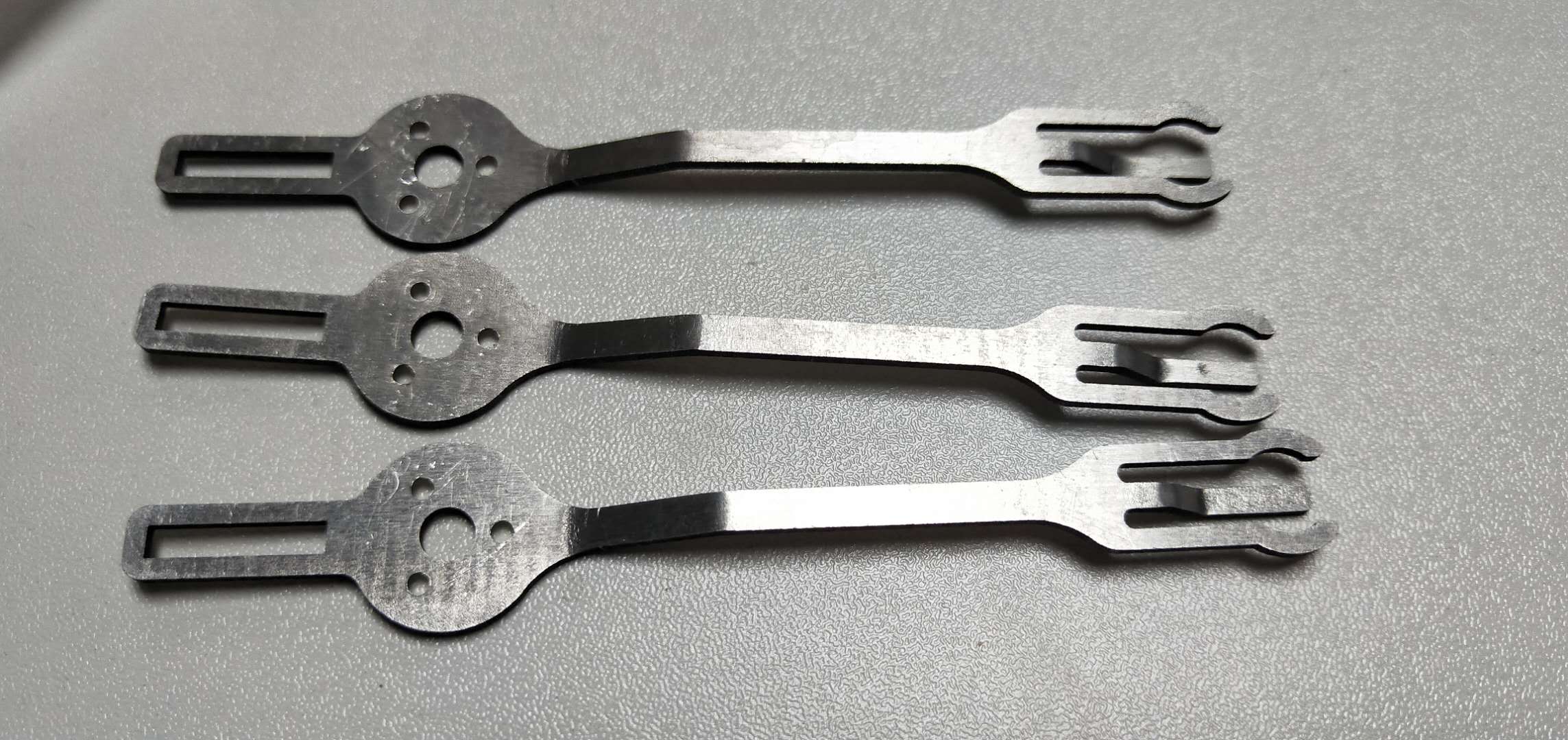
The first stage where DFM carries real weight. Parts are getting close to their production form, and a meaningful number of them will survive into production unchanged.
What to verify: that stated tolerances are achievable in the intended process, that the specified material is available in the required form, that features are reachable with standard tooling, and that nothing in the design forces a non-standard setup. Cost drivers should be identified here even if they are not yet addressed, because this is the last stage where changing them is cheap.
DVT
The design should be frozen or close to it, and the parts should be made in production-intent materials and processes. This is the full round.
What to verify: everything. Tolerance stack across the whole assembly, not just individual parts. Fixturing and setup count. Secondary processes and their lead times. Finishing. Inspection method, including whether the tight dimensions can actually be measured. Supplier capability against the tightest features on the part.
This is the round that should not be skipped or compressed. A finding here is still cheap to fix. The same finding one stage later is not.
PVT
DFM should already be closed out. The work at PVT is process validation: tooling, yield, repeatability, and whether the line holds the tolerances over a run rather than on one part.
A DFM finding at PVT is expensive, because tooling exists and a change means recutting it. Findings at this stage are usually the result of a review that was deferred earlier.
DFM is specific to a process
This is the part that catches teams that did everything else right.
A DFM review is a review against one manufacturing process. A machining review does not transfer to injection molding. A part that passes every machining check can still have no draft, no uniform wall thickness, and no viable gate location.
Most hardware products are prototyped in CNC machining or 3D printing and produced in a different process. The moment the production process changes, the part needs a second review against the new process. The prototype passing DFM says nothing about whether the production part will.
The failure mode
The cost of deferring DFM is not the cost of the parts. It is the schedule.
When findings surface after the design is committed, after tooling is cut, or after a supplier is selected, the fix is a redesign, a new tool, and another validation build. That is measured in months, not in part cost. The same finding at EVT is a CAD revision and an afternoon.
When DFM is not worth it
There are cases where a full review is wasted effort:
- Concept parts that will never be produced in any quantity.
- Test fixtures and jigs.
- Parts made once to validate a single mechanical assumption.
- Any part where the production process has not been decided, because the review cannot be run against an unknown process.
Spending a week on manufacturability for a part that gets thrown away is time that could have gone into the next revision.
How to decide
The rule is short. If production is on the table, DFM is required. If production is not on the table yet, verify that the concept works and move on.
The honest position is that a round of DFM is always worth running, because it costs less than the finding it catches. It is also true that it is not always necessary, and that early in development the design will move faster than the review can keep up with. Both of those can be true at the same time. What is not defensible is reaching a design freeze without one.
Getting DFM without asking for it
OpusFab returns DFM feedback automatically on every quote, at no cost. Upload a STEP file and the manufacturability issues come back with the price, before anything is ordered. Minimum radii, wall thickness, tolerance concerns, and tool access problems are flagged with the specific feature and dimension involved, and the full report is downloadable as a PDF.
That covers the case where DFM is not on the agenda. Even for a proof of concept where manufacturability is not the question being asked, the feedback comes back anyway. When the design does reach a freeze, the history is already there.