Why It Takes 12-18 Months to Go From Prototype to Production
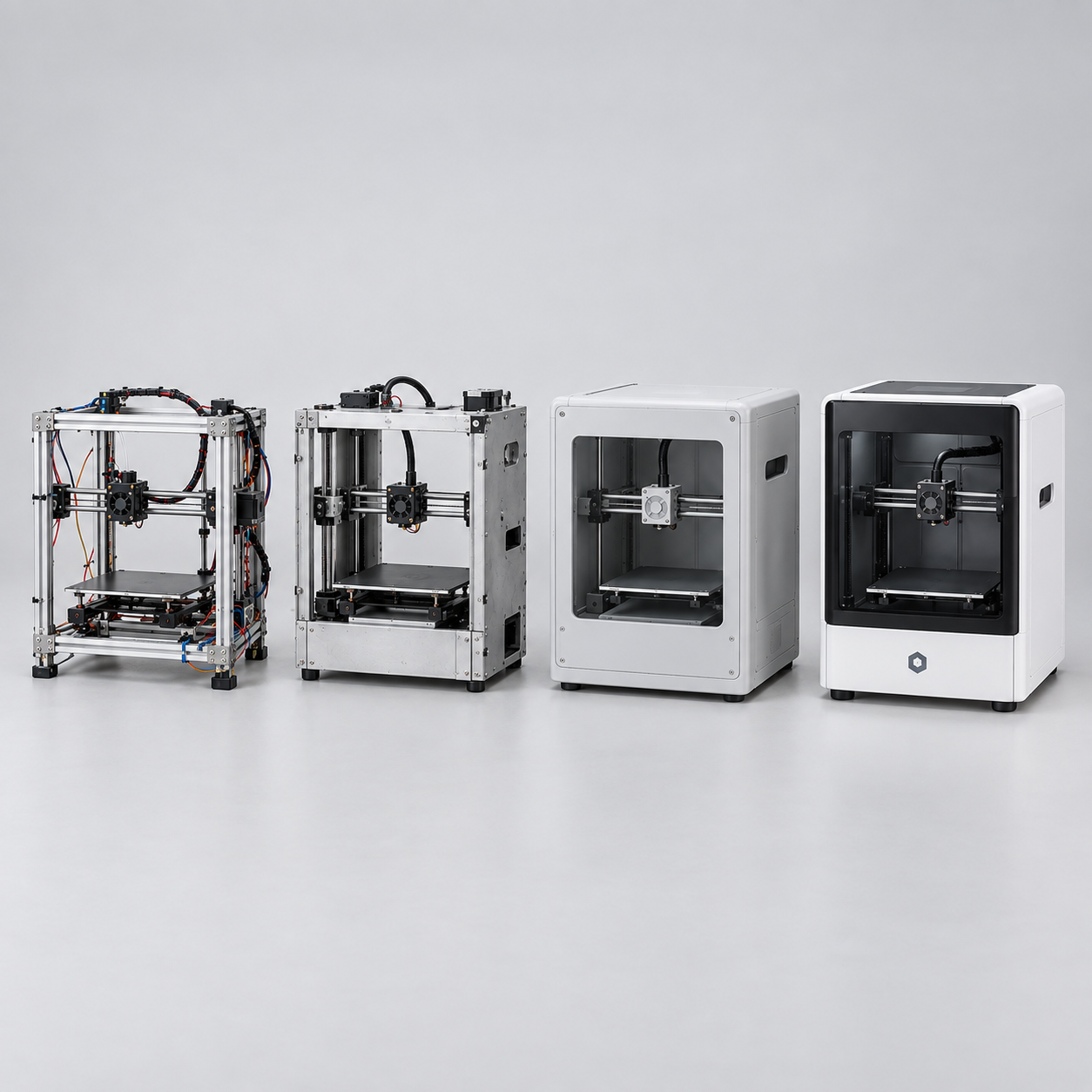

When developing a product, many companies underestimate a lot of the individual steps, and even more often they underestimate how many times each step needs to happen. A team might plan for three rounds of prototypes and end up needing six. They might plan for one round of quotes and end up needing four. None of these are signs that something went wrong. They’re the normal shape of developing an electromechanical product.
The 12-18 month timeline isn’t one long process. It’s six phases, and most of them repeat when something upstream changes. Below is a breakdown of each phase and why the total ends up longer than the sum of its parts.
1. Request for Quotation (RFQ) (3 weeks)
Getting an initial request for quotation (RFQ) back from a manufacturing partner takes about three weeks, even before any design iteration starts. Most of that time isn’t spent checking whether the supplier has open capacity. It’s spent studying the project itself:
- Spec review. The supplier has to read through drawings, tolerances, and material callouts to understand what’s actually being asked for, which takes longer when the spec is incomplete or ambiguous.
- Understanding the product. For a new part or assembly, the supplier’s engineering team has to work through how it’s built, what each feature is for, and where the tolerances actually matter, before they can price it accurately.
- Manufacturability input. Someone on the supplier’s engineering team typically has to weigh in on how the part would be made before a price can be committed to, since the wrong assumptions here get expensive later.
- Back-and-forth on missing information. Most RFQs come back with questions before they come back with a number: unclear tolerances, missing material specs, or ambiguous assembly instructions all add days of email exchange before quoting can start.
2. Additional Quotes From Product Changes (9 weeks)
Quotes rarely finalize on the first pass. As the design changes, whether from internal review, cost targets, or new requirements, each revision requires a new quote from the supplier. This is the largest single phase in the process, and the delay comes from iteration, not from new work being added. A few reasons this stretches to nine weeks:
- Design changes rarely land in one round. A cost target that isn’t met, a material substitution, or a tolerance adjustment each require the supplier to requote, and these adjustments tend to surface one at a time rather than all at once.
- Each round is faster than the first, but still takes time. Because the supplier already studied the product during the initial RFQ, requoting doesn’t require starting from zero. But it still requires reviewing what changed, checking how it affects cost and process, and confirming the update, so it isn’t instant either.
- Internal approval adds time on top of supplier time. Each new quote usually needs sign-off from the company’s own engineering or finance team before it’s accepted or sent back for another round.
- Multiple suppliers compound the delay. If more than one supplier is being quoted in parallel, the slowest one sets the pace, and a design change means requoting with all of them, not just one.
3. Prototyping and Validation (15 weeks)
This phase covers building physical prototypes and testing them against requirements. It’s the longest phase and the most iterative one, since validation failures are common and each one requires another round. What fills the fifteen weeks:
- Lead time on prototype parts. Even with a finalized quote, machining, molding, or fabricating first-article parts takes real time, particularly for parts with long-lead materials or processes.
- Assembly and functional testing. Once parts arrive, they have to be assembled and tested against the product’s functional requirements, which often surfaces fit or performance issues that weren’t visible on paper.
- Failures require a design change. When a prototype fails validation, whether from a dimensional issue, a material problem, or a functional gap, the fix usually requires revising the design, which means requoting and building another prototype before testing can happen again.
- Multiple validation rounds are the norm, not the exception. Few products pass validation on the first prototype, so this phase typically includes more than one build-test-revise cycle before the design is considered stable. This is one of the areas teams most consistently underestimate, and the prototype playbook covers what it actually takes to get through this phase in more detail.
4. Supplier Search and Evaluation (8 weeks)
Identifying, vetting, and qualifying manufacturing partners takes about eight weeks. This phase can run in parallel with prototyping, but often doesn’t, depending on how far along the design is when supplier search starts. The time typically goes toward:
- Identifying candidates. Finding suppliers with the right process capabilities, certifications, and volume capacity for the specific part narrows the list significantly before evaluation even starts.
- Facility and quality audits. Qualifying a supplier usually involves reviewing their quality systems, and sometimes an on-site or virtual audit, particularly for parts with tight tolerances or regulatory requirements.
- Reference checks and sample runs. Companies often ask for sample parts or references from existing customers before committing, which adds a round of production and evaluation on the supplier’s side.
- Negotiating terms. Pricing, payment terms, minimum order quantities, and lead time commitments all need to be worked out, which can take several rounds of back-and-forth once a supplier is otherwise qualified. EPower Corp has written about what to actually look for when evaluating a new contract manufacturer, which covers this in more depth.
5. Design for Manufacturability (DFM) Review (6 weeks)
Design for manufacturability (DFM) review is where manufacturing feedback catches design issues before they become expensive problems in production. In practice, this feedback often comes too late, after prototypes are built and suppliers are already selected, instead of earlier in the process where it would prevent rework. Six weeks typically covers:
- Detailed manufacturability review. The supplier’s engineering team reviews the design specifically for how it will be produced at volume, not just whether a single prototype can be built, which surfaces issues that don’t show up in low-volume prototyping.
- Tolerance and material feasibility at scale. A tolerance that’s achievable on a single prototype part may not be repeatable across a production run, and DFM review is where that gap gets identified.
- Design changes coming out of DFM. When DFM surfaces an issue, the fix often requires another design revision, which can mean requoting or even another round of validation if the change is significant enough.
- Coordination across mechanical and electrical teams. For electromechanical products, DFM often needs input from both mechanical and electrical engineering, since a manufacturability fix on one side can affect the other.
6. Tooling Analysis (2 weeks)
Tooling analysis is the final step before committing to production tooling. It’s short on paper, but it’s blocked until everything upstream, design, supplier, and DFM, is finalized. What happens in these two weeks:
- Tooling design and cost review. The supplier finalizes the tooling design and confirms cost and lead time, which depends entirely on the design being fully settled beforehand.
- Sign-off before a significant capital commitment. Tooling is usually one of the largest upfront costs in the entire process, so this step typically requires formal approval before the supplier proceeds.
- Any late design change requires redoing this step. Because tooling is built around exact part geometry, even a small change identified this late requires the tooling analysis to be redone.
Why the Total Exceeds the Sum of the Parts
Adding these phases linearly gives about 43 weeks, or roughly 10 months. The gap between that number and the 12-18 months companies actually experience comes from the fact that these phases aren’t purely sequential. They repeat.
A DFM finding can require going back to supplier evaluation. A validation failure can trigger a new quoting cycle. Most projects go through several of these cycles before reaching production, and each one adds weeks that don’t show up in a linear estimate.
It’s also worth noting that these numbers reflect constraints on the manufacturing side only. They don’t account for delays specific to the company developing the product, such as slow internal decision-making, which can add significant time on top of this timeline.
Conclusion
The path from prototype to production takes 12-18 months because it’s made up of six phases that rarely run in a straight line: an initial RFQ, several rounds of requoting as the design changes, prototyping and validation, supplier search and evaluation, DFM review, and tooling analysis. Added up linearly, these phases come to about 10 months. The rest of the timeline comes from how often the process loops back on itself: a validation failure that triggers another quote, a DFM finding that sends the design back for changes, a prototype round that has to be repeated.
Understanding where the time actually goes, and how many times each step tends to repeat, is the first step toward planning a more realistic timeline and finding where it can actually be shortened.